7 New Microsoft AI Models Introduced in Build 2026

Writer

The physics of AI development have crystallized into a definitive law: intelligence is a predictable function of compute. Over the past 15 years, the computational power poured into frontier models has expanded by twelve orders of magnitude—a one-trillion-fold increase. As log-linear hillclimbing remains the industry-standard execution strategy, the scaling laws continue to hold without deviation.
With three additional orders of magnitude of compute projected for the immediate horizon, the architectural challenge transitions from brute-force scaling to deliberate, full-stack systems engineering. At the core of this engineering milestone is a shift toward what is termed Humanist Superintelligence—building highly performant, enterprise-grade frontier models optimized specifically to act as force multipliers for human organizations, rather than dropped-in replacements.
To fulfill this roadmap, a comprehensive new ecosystem of seven specialized models across vision, voice, transcription, reasoning, and coding has been deployed, native to both specialized enterprise silicon and distributed open ecosystems.
The MAI Multimodal Family: Deep Technical Breakdown
1. High-Fidelity Vision: MAI Image 2.5 & Image 2.5 Flash
Designed to address enterprise demands for pixel-level precision, spatial consistency, and strict asset control, MAI Image 2.5 introduces a substantial leap in generative fidelity.
- Benchmark Performance: Image 2.5 has captured the #2 spot globally on the public image leaderboards, notably outperforming Nano Banana 2 in complex image editing and logical modification tasks.
- Deployment Architecture: The model ships in two discrete variants. The standard Image 2.5 is tuned for maximum fidelity and professional-grade desktop design applications. The Flash variant is compressed for highly efficient, sub-second production workloads.
- Integrations: Native execution is live within Microsoft PowerPoint and rolling out to OneDrive, alongside raw API availability on Foundry at a highly competitive quality-per-dollar ratio.
2. State-of-the-Art Transcription: MAI Transcribe 1.5
MAI Transcribe 1.5 establishes a new ceiling for speech-to-text accuracy and inference throughput.
- Multilingual Coverage: It delivers state-of-the-art accuracy across 43 languages natively, outperforming the flagship transcription models of both Google Gemini and OpenAI on complex audio files containing cross-talk, heavy accents, and industry-specific terminology.
- Throughput Metrics: Highly optimized execution paths allow Transcribe 1.5 to process audio 5x faster than all contemporary rival architectures.
- Ecosystem Footprint: To support high-volume pipelines, it is deeply embedded within GitHub, Microsoft Teams, Copilot, and the Dynamics 365 Contact Center, alongside broad infrastructure availability on Foundry.
3. Low-Latency Speech Synthesis: MAI Voice 2 & Voice 2 Flash
Voice interaction in 2026 demands realistic prosody and instant execution. MAI Voice 2 delivers human-grade text-to-speech with fine-grained emotional modulation and natural inflection control.
- Localization: Launching with complete phonetic support for 15 languages, with additional linguistic profiles currently in training.
- Voice 2 Flash: Specifically engineered for ultra-latency-sensitive voice agents, minimizing time-to-first-token (TTFT) to eliminate the cognitive friction typically found in automated voice systems.
The Next Era of Reasoning and Coding: Thinking 1 & Code 1 Flash
The traditional approach of building massive, monolithic text models is giving way to highly targeted, dense-sparse architectures optimized for specific cognitive workflows.
MAI Thinking 1: The Reasoning Engine
MAI Thinking 1 represents a shift away from speculative, next-token “vibe coding” toward systematic, multi-step problem-solving.
| Architectural Feature | Specification |
|---|---|
| Model Type | Mixture of Experts (MoE) |
| Active Parameters | 35 Billion (35B) |
| Context Window | 256,000 Tokens (256k) |
| AME 2025 Score | 97% |
| SWE Bench Pro Score | 53% |
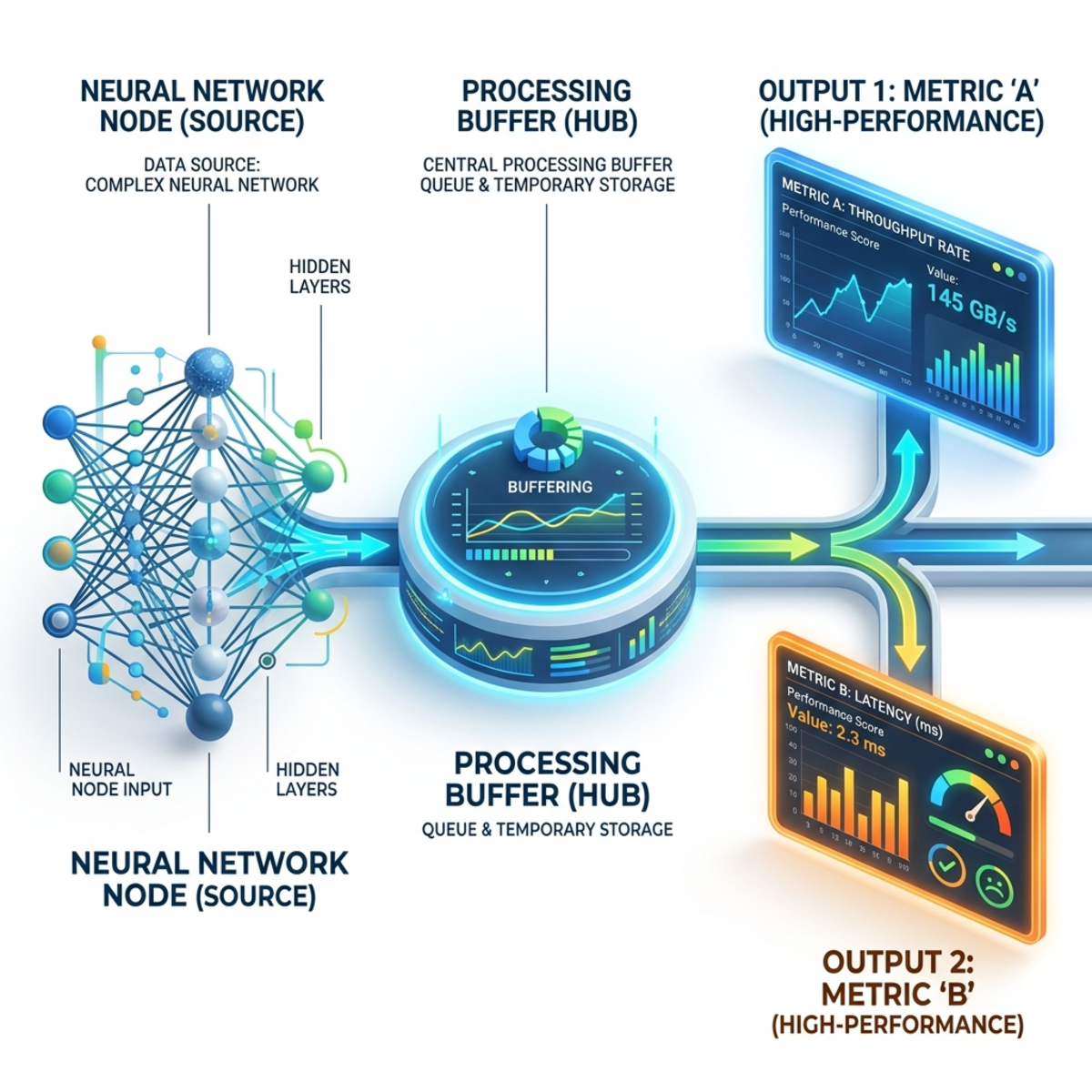
Thinking 1 competes directly in the medium-weight class but punches far above its structural weight. Independent human evaluations via Surge show that raters prefer Thinking 1 in head-to-head side-by-side quality comparisons against heavier models like Sonnet 4.6.
On SWE Bench Pro, its 53% success rate places it on equal footing with Opus 4.6 on the most grueling software engineering benchmarks available.
Zero Distillation and Commercially Clean Lineage
Crucially, Thinking 1 achieved these benchmarks without relying on synthetic data distillation from larger models. It was trained entirely from scratch using a fully transparent, enterprise-grade, and commercially licensed data lineage. This ensures that organizations can deploy the model into strict production environments with complete compliance and legal confidence.
MAI Code 1 Flash: Parameter-Efficient Engineering
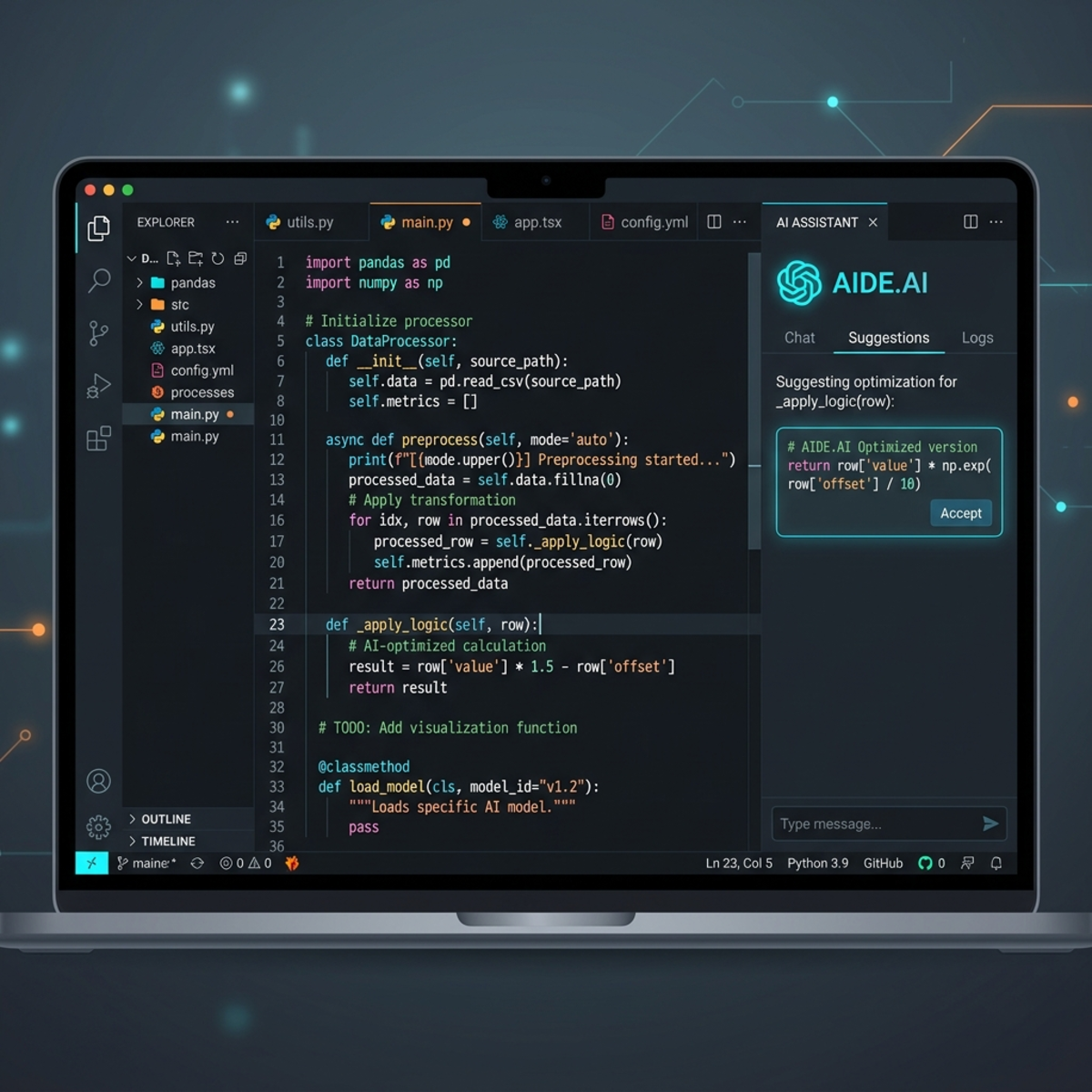
For real-time IDE integrations, MAI Code 1 Flash provides an ultra-lean alternative optimized for immediate, context-aware code generation.
- Efficiency Metrics: Clocking in at just 5 Billion (5B) parameters (comparable to a Haiku-class footprint), it shockingly captures a 51% score on SWE Bench Pro—trailing the much larger Thinking 1 model by a mere two percentage points while operating at a fraction of the compute cost.
- Distribution Strategy: Tuned specifically for VS Code and the GitHub Copilot CLI, Code 1 Flash is accessible across a wide variety of developer hubs. For the first time, developers can interact with and tune the weights directly across OpenRouter, Fireworks, and Baseten, breaking the vendor-lock common with proprietary frontier models.
Trust, Safety & Governance
As these models roll out, a strong focus has been placed on safety and compliance. This includes anti-cloning mechanics, systematic watermarking to ensure content provenance, over-refusal remediation to strike the right balance between helpfulness and safety, extensive disability representation, and the publication of detailed technical reports.
Full-Stack Co-Design: Maia 200 Silicon Alignment
True performance efficiency cannot happen at the software layer alone; it requires deep hardware-software co-design. MAI Thinking 1 has been co-developed alongside native Microsoft silicon, specifically optimized for the Maia 200 accelerator chip.
- Performance vs. Watt: When evaluated against an infrastructure backed by NVIDIA GB-200 systems, running MAI models end-to-end on Maia 200 delivers an additional 1.4x performance-per-watt gain. This efficiency boost builds directly on top of the base 30% system-level optimization native to the architecture.
- Edge Integration: These highly optimized configurations are bound for client-side deployments on the Windows N1X platform architecture, unlocking local, low-power desktop reasoning capabilities within the coming months.
Enterprise Moats: Frontier Tuning and Reinforcement Learning Environments (RLEs)
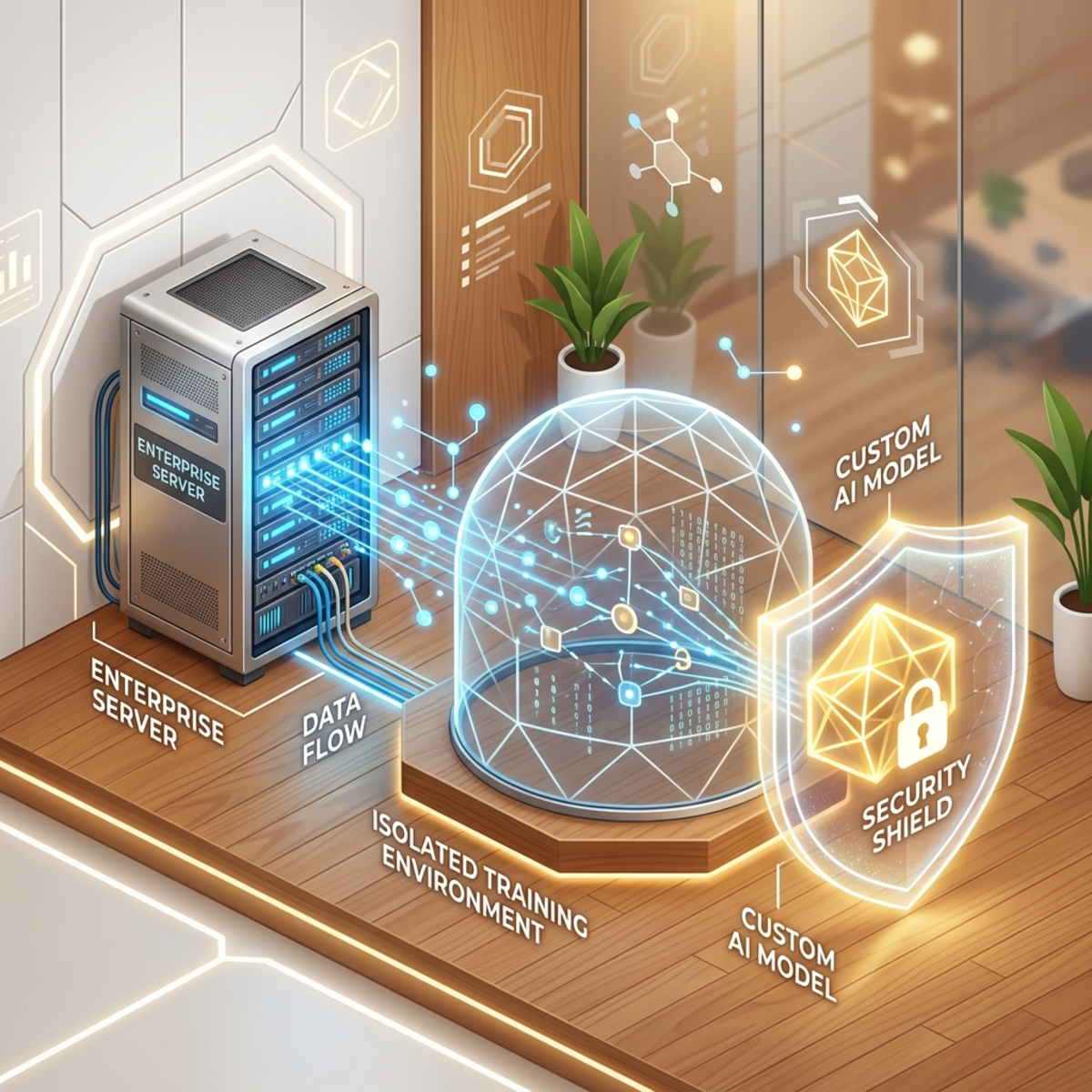
The paradigm of renting intelligence from massive, shared public models is rapidly becoming obsolete. In this new enterprise architecture, sustainable competitive advantage is achieved through Frontier Tuning powered by Reinforcement Learning Environments (RLEs).
RLEs act as specialized, task-specific training gyms that simulate company workflows, allowing base MAI models to iteratively hillclimb against real-world internal traffic without leaking data to a shared pool.
Proven Enterprise Case Studies
- The Excel Optimization Pipeline: By pairing internal RLEs with specialized MAI architectures, internal engineering teams brought an Excel-focused agent to absolute parity with GPT 5.4 on both public and private benchmarks, while achieving a massive 10x reduction in inference cost.
- The McKinsey Task Evaluation: When deployed against McKinsey’s complex operational tasks, the frontier-tuned MAI models achieved the highest overall task win rate, outperforming public flagships like GPT 5.5 while maintaining the same 10x cost-efficiency advantage.
Through this approach, institutional data, private workflows, and operational knowledge remain completely sovereign. The resulting optimized weights become an exclusive corporate moat, fully controlled and owned by the organization.
Vertical Frontier Development: The Mayo Clinic Partnership
The ultimate test of Humanist Superintelligence lies in highly complex, high-stakes domains like global healthcare. To push past the limits of generalized text training, Microsoft has entered into a deep co-development partnership with the Mayo Clinic to build a dedicated, domain-specific Frontier Model for Health.

While contemporary LLMs excel at processing standardized textbook medical data and medical journals, they lack real-world clinical execution context. This joint venture merges MAI’s deep reasoning architecture with the Mayo Clinic Platform, an infrastructure spanning four continents and encompassing a deep, longitudinal, multimodal dataset representing 100 million patients, including high-fidelity genomics.
Clinical and Operational Architecture
The resulting health model is engineered for two primary environments:
- For Patients: Providing context-aware, highly accurate clinical and logistical answers regarding care pathways without hallucination risks.
- For Healthcare Providers: Operating as a real-time, AI-backed clinical team member to provide predictive insights, anticipate complications before they occur, prevent medical errors, and actively enhance overall patient safety.
By blending pristine enterprise data lineages, hardware-level silicon co-design, and sovereign RLE training environments, this new tier of specialized agents marks a clean break from generalized public models—handing complete architectural control back to the developers and organizations building the future.
Read next