Beyond the Chatbot: Engineering Autonomous 'Missions' with Multi-Agent Ecosystems

Writer
Quiz available
Take a quick quiz for this article.
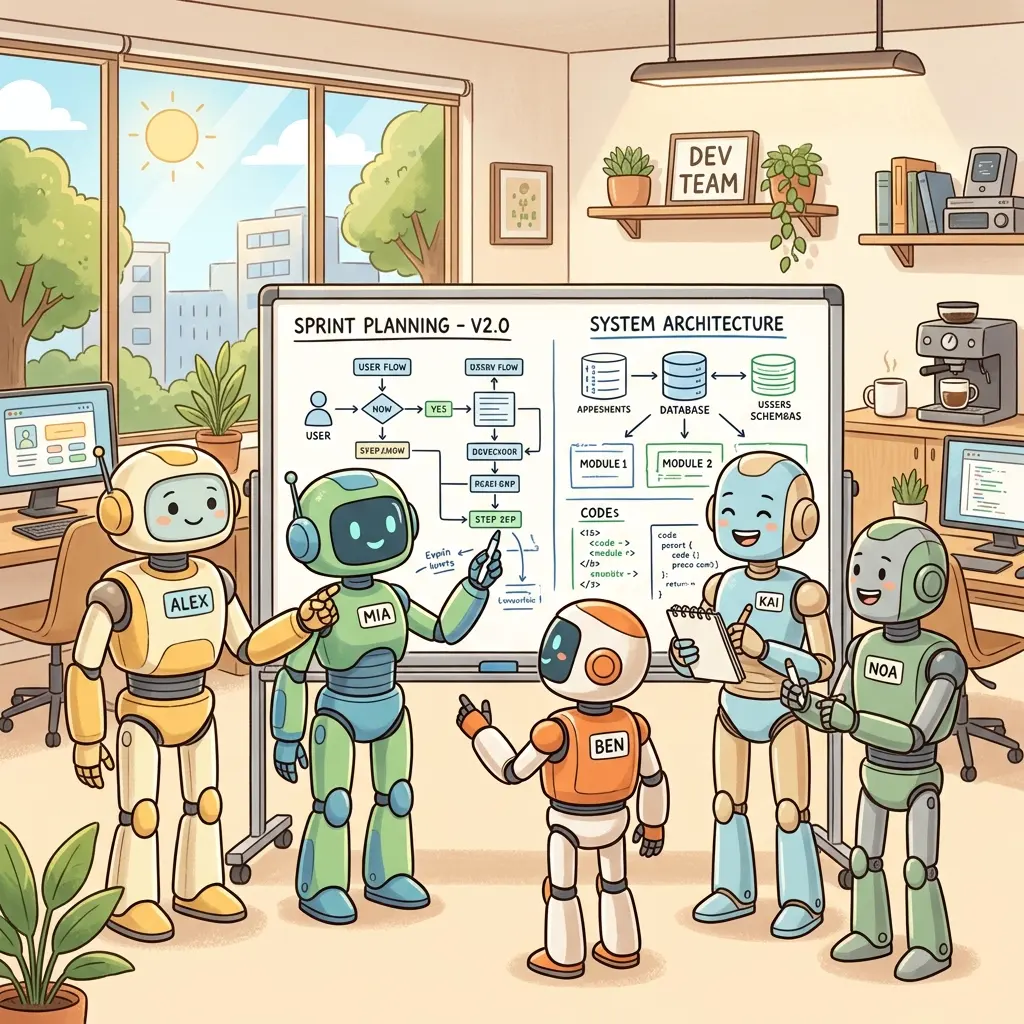
The landscape of software development is shifting. As we move away from simple code completion toward fully autonomous workflows, we are realizing a fundamental truth: The bottleneck in modern engineering is no longer intelligence—it is human attention. Even the most skilled architects can only supervise a few workstreams at once.
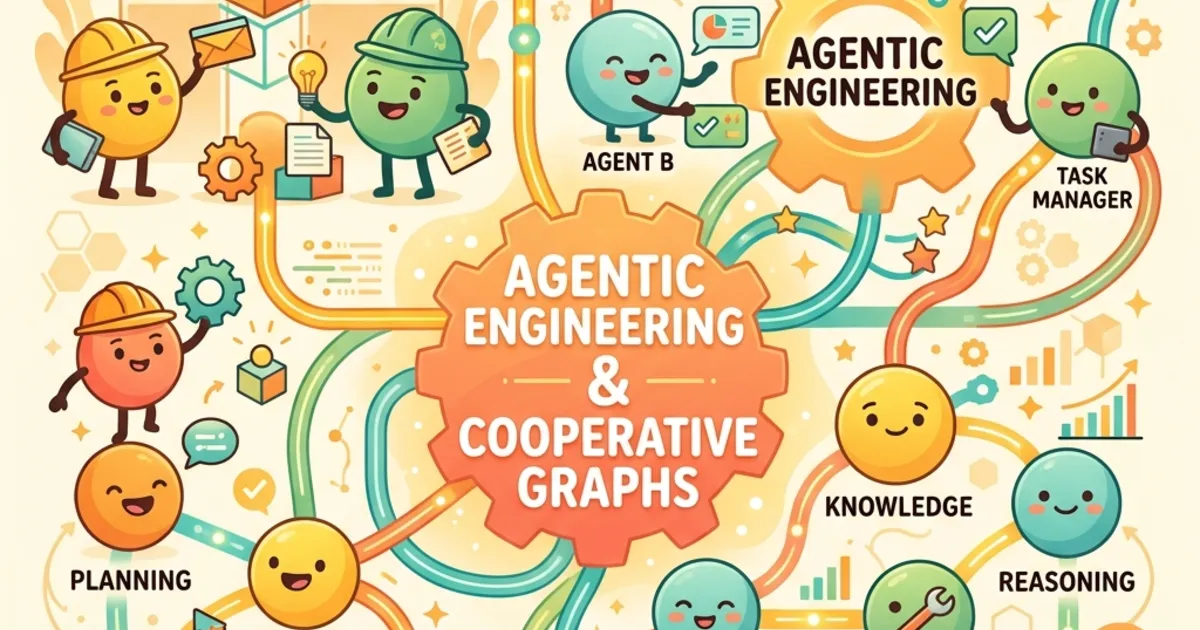
To bridge this gap, we must move beyond the “single agent” paradigm and toward Missions—structured, multi-agent ecosystems capable of running for days or weeks autonomously.
1. The Multi-Agent Taxonomy: 5 Design Patterns
Before building a complex system, you must understand how agents communicate. There are five frontier frameworks:
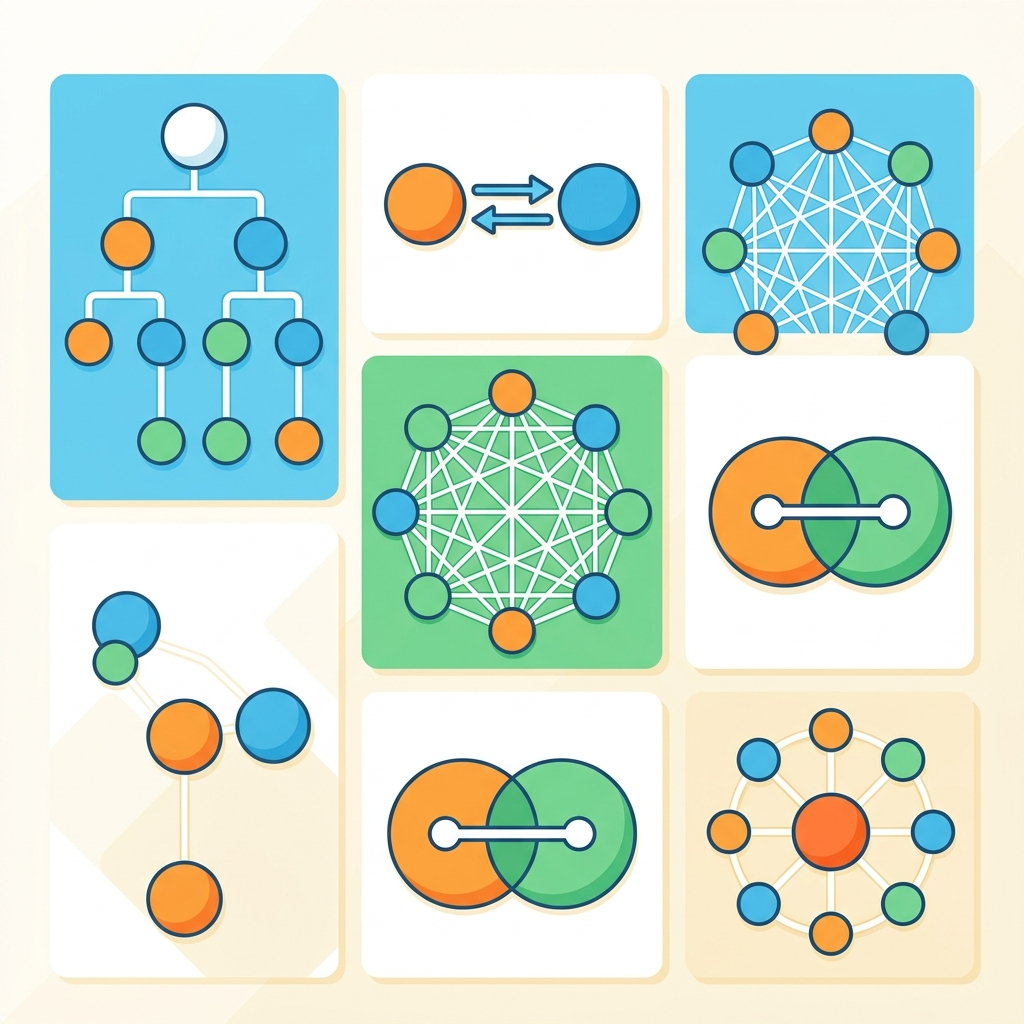
- Delegation: A parent agent spawns sub-agents for specific tasks. Best for simple sub-tasks (e.g., “Find the DB schema”).
- Creator-Verifier: One agent builds; another (with fresh context) reviews. Best for reducing confirmation bias in code reviews (Separation of concerns).
- Direct Communication: Agents DM each other without a central coordinator. Best for high-speed interaction, but it risks state fragmentation (hard to maintain state).
- Negotiation: Agents trade resources or resolve conflicts over a codebase. Best for managing shared APIs or conflicting architectural paths via positive-sum trading.
- Broadcast: One agent sends status updates or constraints to many. Best for maintaining coherence in long-running projects.
2. The “Missions” Architecture (The 3 Roles)
A “Mission” is not just a long-running chat; it is a three-role architecture designed to prevent the “drift” that usually plagues long-running LLM sessions.

The Orchestrator (The Architect)
The orchestrator acts as the strategic lead. It doesn’t write code; it asks questions, acts as a sounding board, and handles requirement gathering. Its output is a Validation Contract—a pre-defined set of assertions that define “success” before a single line of code is written.
The Workers (The Implementers)
Workers operate on a “Clean Slate” principle. Each feature is assigned to a worker that inherits a clean context. This prevents “accumulated baggage” and degraded attention spans. They use serial implementation, and once finished, they provide a Structured Handoff detailing:
- What was completed vs. left undone.
- Specific commands run and their exit codes.
- Issues discovered for the orchestrator to rescope.
The Validators (The Adversaries)
Validation must be adversarial by design. Missions utilize two types:
- Scrutiny Validators: Run linters, type checks, and spawn dedicated code-review agents.
- User Testing Validators: The “QA Engineer.” This agent uses tools like “Computer Use” to spin up the app, click buttons, and verify functional flows.
3. The Secret Sauce: Validation Contracts & Serial Execution
One of the most counter-intuitive findings in agentic engineering is that parallelism often fails in software tasks.
Why Serial Wins Over Parallel
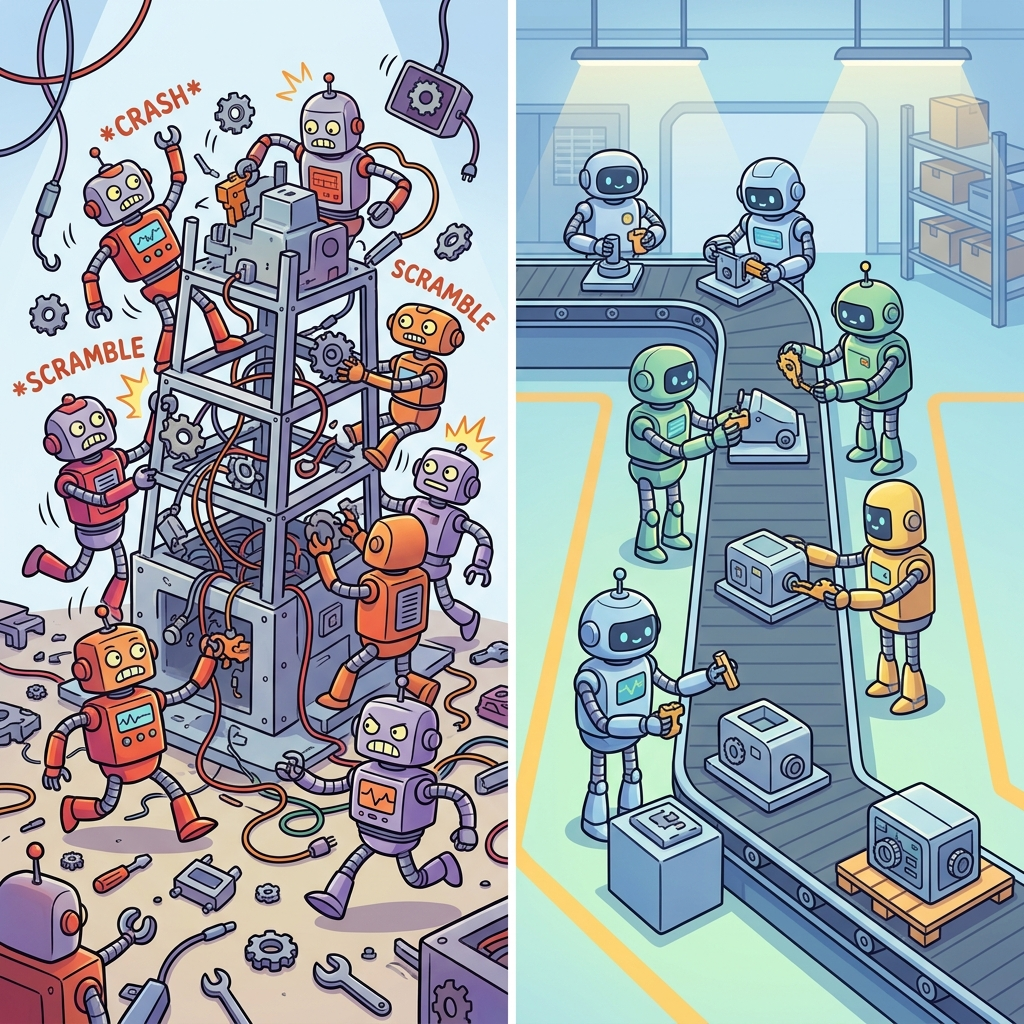
When 10 agents work in parallel on the same codebase, they step on each other’s toes, duplicate work, and make inconsistent architectural choices. Missions execute features serially. While it seems slower on paper, the error rate drops so significantly that the “wall clock time” is actually reduced because the system doesn’t have to constantly self-correct for merged conflicts. Coordination overhead kills speed.
The Validation Contract
Tests written after code only confirm decisions already made. The Validation Contract is defining “done” before implementation. It ensures that the system validates behavior, not just syntax (Behavioral QA). If a feature fails, the system doesn’t just hope the agent remembers what happened—it uses the contract to force a rescope.
4. “Droid Whispering”: Placing the Right Model in the Right Seat
There is no “one model to rule them all.” A model-agnostic architecture is a structural advantage. “Droid Whispering” means picking the right tool for the job based on Reasoning vs. Coding vs. Instruction Following:
- Planning: Requires slow, high-reasoning models (e.g., O1 or Claude 3.5 Sonnet).
- Implementation: Needs fast, high-fluency coding models.
- Validation: Requires precise, pedantic instruction-following models.
By selecting specific models for specific roles, you ensure that a weakness in one model family doesn’t collapse the entire mission. This also allows for the use of local, quantized models (like DeepSeek or Llama 3 via Mac Studio/NVIDIA hardware) in worker roles to manage costs.
5. Engineering for the “Bitter Lesson”
The most robust systems are those that get better as models improve. The Bitter Lesson here is moving logic from hard-coded state machines to prompts and skills.
- Prompt-Driven Orchestration: Keep the logic in prompts and “skills” (e.g.,
agents.md). - Bookkeeping vs. Intelligence: Let the code handle the bookkeeping (running tests, managing Git commits), but let the LLM handle the decomposition of failures.
The Connective Tissue: Structured handoffs are the glue. Always demand exit codes, undone tasks, and commands run.
Production Stats: In a successful mission, expect validation to fail on the first go. Data shows that “Follow-up Features” created by validators are where the real polish happens. Expect 60% of time spent on implementation, nearly 50% of your lines of code to be tests, and upwards of 90% coverage.
Conclusion: Changing the Economics of Engineering
By moving from 1:1 human-to-task ratios to 1:N human-to-mission ratios, a small team can scale from managing 10 workstreams to 30+. The role of the engineer shifts from “implementer” to “mission controller,” overseeing the orchestrator, arguing about scope, and then letting the ecosystem execute.
The goal is simple: Start a mission, approve the plan, and go do something else. When you return, the codebase should be cleaner than you left it.
Read next