Architecting Hyperscale: How Dataverse Powers the Next Generation of Enterprise AI Agents

Writer
Quiz available
Take a quick quiz for this article.
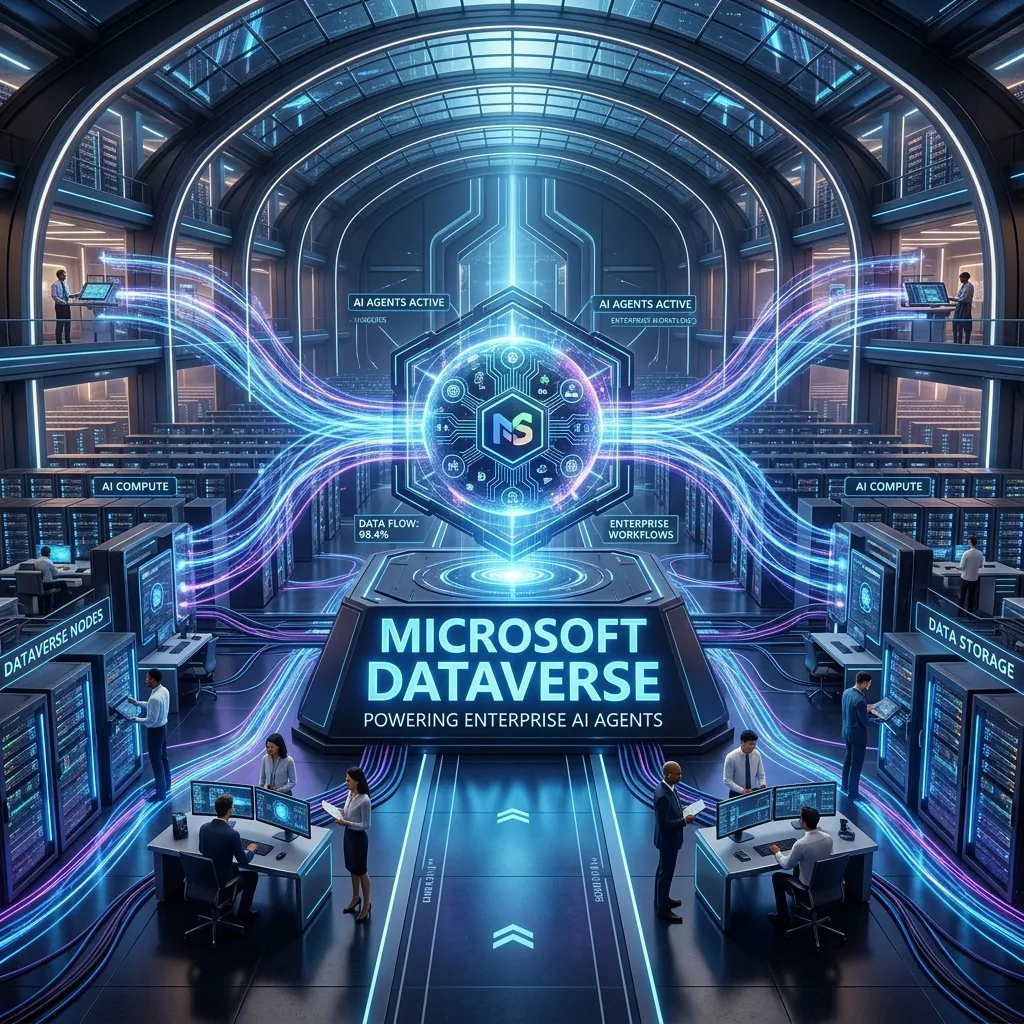
Enterprise architecture is undergoing a massive paradigm shift. For years, the established pattern was “App-first”—building structured environments where human oversight, workflow management, and judgment took center stage. Today, that model is rapidly accelerating into an AI-first, Agentic world.
Organizations are now deploying applications and autonomous agents that must seamlessly coexist. To make this happen without creating a chaotic, unmanageable IT environment, you need a robust foundation. This is where the modern capabilities of Microsoft Dataverse—paired with Entra ID—step in to provide the shared data models, hyperscale infrastructure, and rigid governance required for enterprise AI.
Here is a deep dive into how Dataverse is evolving to support hyperscale data management, advanced AI routing via MCP, and zero-compromise security.
The Trifecta of Modern Enterprise Workflows
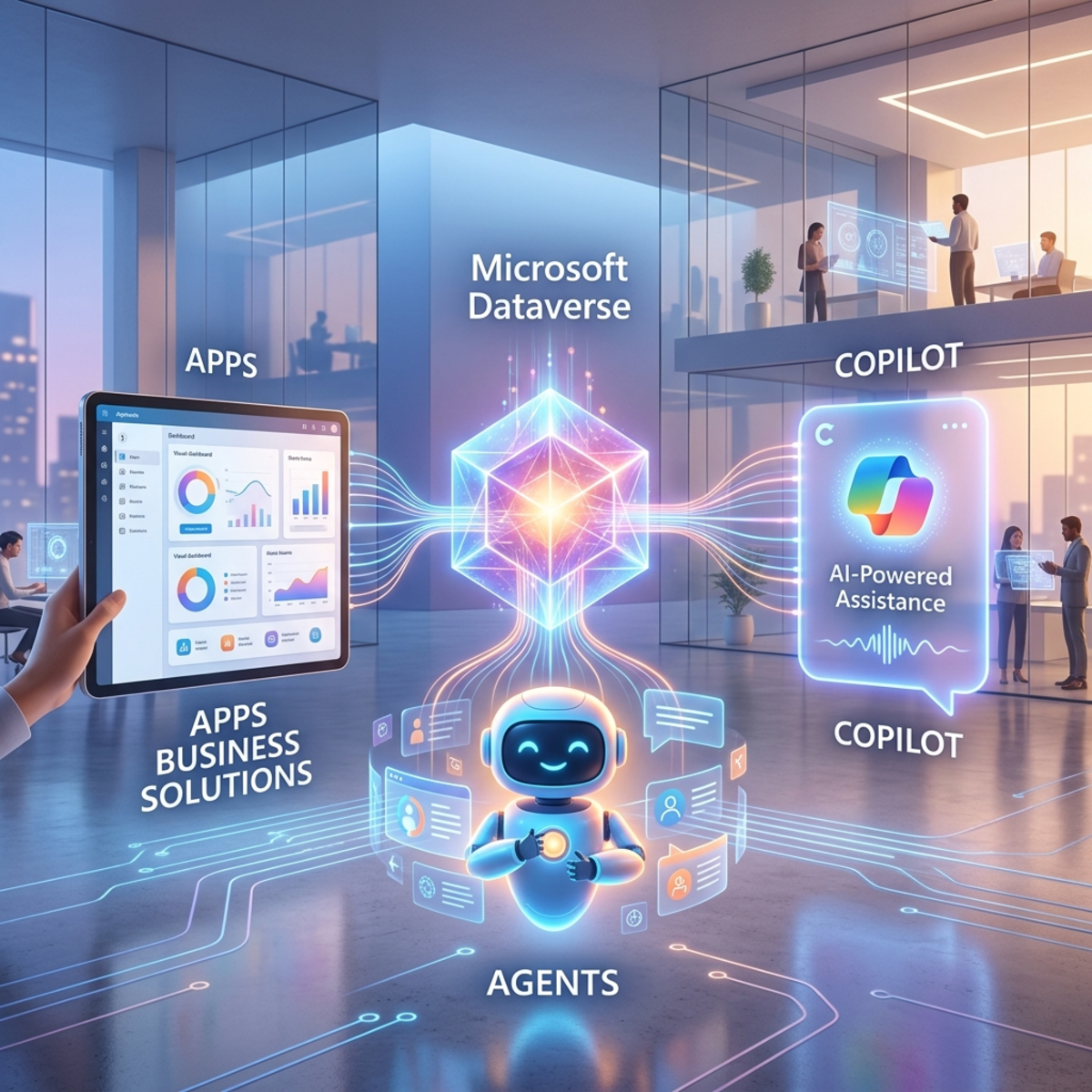
Before diving into the platform features, it is critical to understand how work actually flows in a modern architecture. It breaks down into three core components:
- Apps: The structured environments defining data and rules, optimized for human oversight and exception handling.
- Agents & Workflows: The execution layer. Agents reason over context and execute multi-step actions across systems, while traditional workflows handle predictable, background reliability.
- Copilot: The natural language interface that keeps users in the flow of work without context switching.
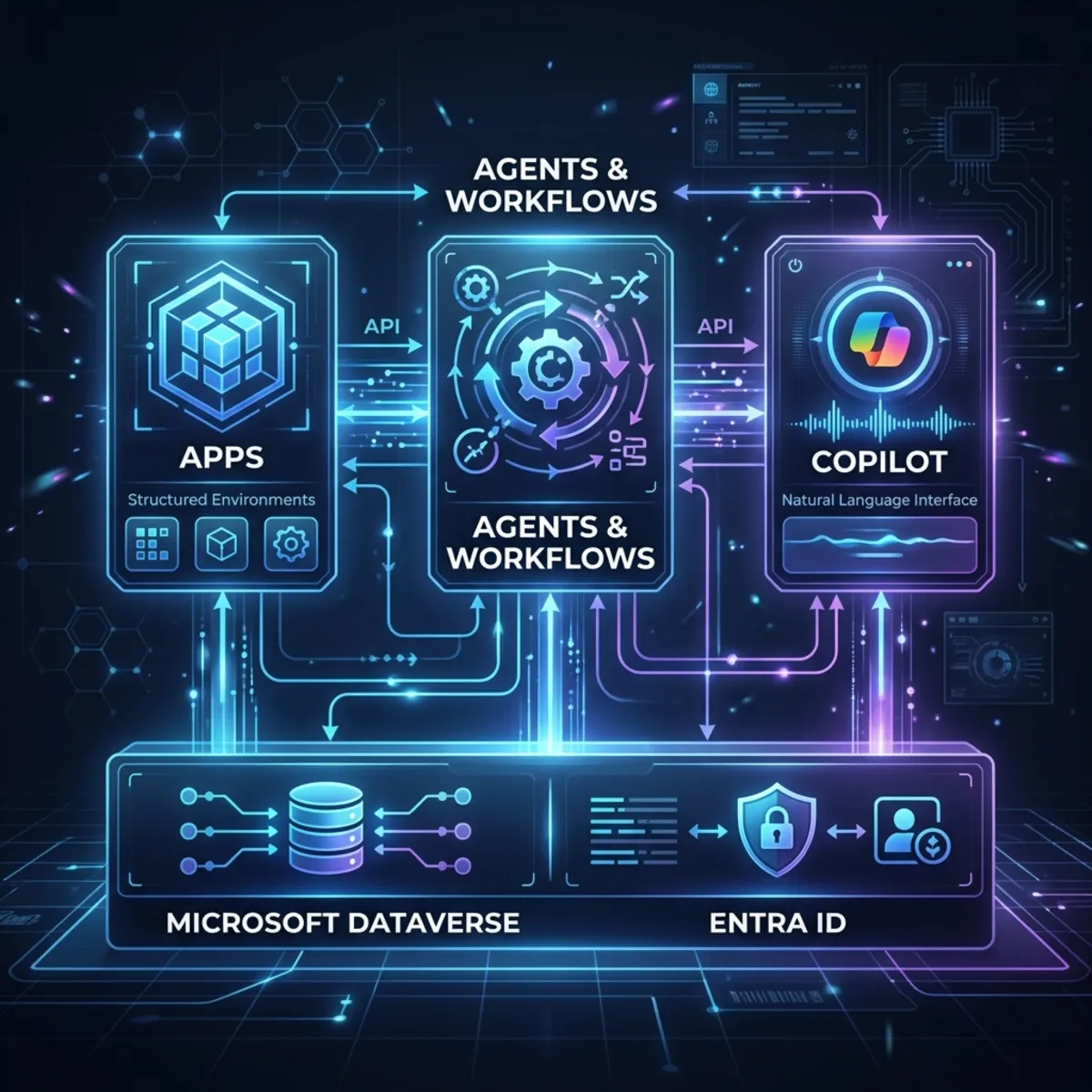
This transition from an “App-first” to an “Agentic workloads” mindset requires reasoning over business data in a unified way. The foundational layer powering this shift is Dataverse (the data model and logic) paired with Entra ID (identity and governance).
At its core, Dataverse provides three main pillars for enterprise AI: Developer efficiency/hyperscale, in-context data/logic, and enterprise IT security.
1. Hyperscale Data Management & Fabric Integration
Running enterprise workloads means dealing with massive data estates. Dataverse tackles storage optimization and analytical scaling through two major features:
- Long-Term Retention (LTR) / Data Archival: To optimize Dataverse storage costs, LTR allows organizations to archive infrequently accessed data while maintaining strict regulatory compliance.
- Zero-Copy Microsoft Fabric Integration: You no longer need complex ETL pipelines to analyze operational data. Dataverse natively integrates with Fabric in real-time.
Pro Tip: You don’t have to sync your entire Dataverse environment. The “Link to Fabric” experience allows you to select specific tables to sync, saving both compute time and storage costs.
Once synced, you can leverage Fabric Copilots and Fabric data agents to run precise queries against operational data instantly, yielding immediate, actionable insights.
2. Intelligent Search: The Foundation of AI Grounding
For an AI agent to be useful, it must understand your business data. Dataverse Search acts as the retrieval engine for these experiences, supporting full-text keyword matching, structured filtering, and unstructured vector search.
Real-Time Adaptive Ranking: Search ranking in Dataverse isn’t static. It uses intelligent signals—like interaction recency and record ownership—to prioritize results. If you frequently edit a specific record, the system learns and bumps it to the top of your results automatically.
Copilot Studio Integration: When using Dataverse as a knowledge source in Copilot Studio, the system explicitly respects permissions and natively supports embedded image understanding for uploaded PDFs, allowing agents to reason over visual charts and diagrams seamlessly.
The Glossary Trick: If your organization uses complex internal acronyms (e.g., HRR for “Happy Review Rate”), you don’t need to waste tokens on complex prompt engineering. You can simply add the term and its mathematical definition to the Dataverse Knowledge Glossary. The agent will instantly understand and calculate the metric based on natural language requests.
3. The Game Changer: Dataverse Model Context Protocol (MCP)
Perhaps the most exciting development for AI architects is the integration of the Model Context Protocol (MCP). The Dataverse MCP server acts as a standardized bridge, making your entire Dataverse environment “AI-native” without requiring custom APIs or SDKs.
Whether you are using GitHub Copilot in VS Code or building a custom agent in Copilot Studio, MCP unifies AI access and standardizes how the LLM interacts with your data.
Full Natural Language CRUD: Users can ask the agent to “Show me accounts in Seattle” or “Create a new account called Northwind Traders.” The MCP translates these natural language requests into specific tool calls (e.g., list tables, read query, create record).
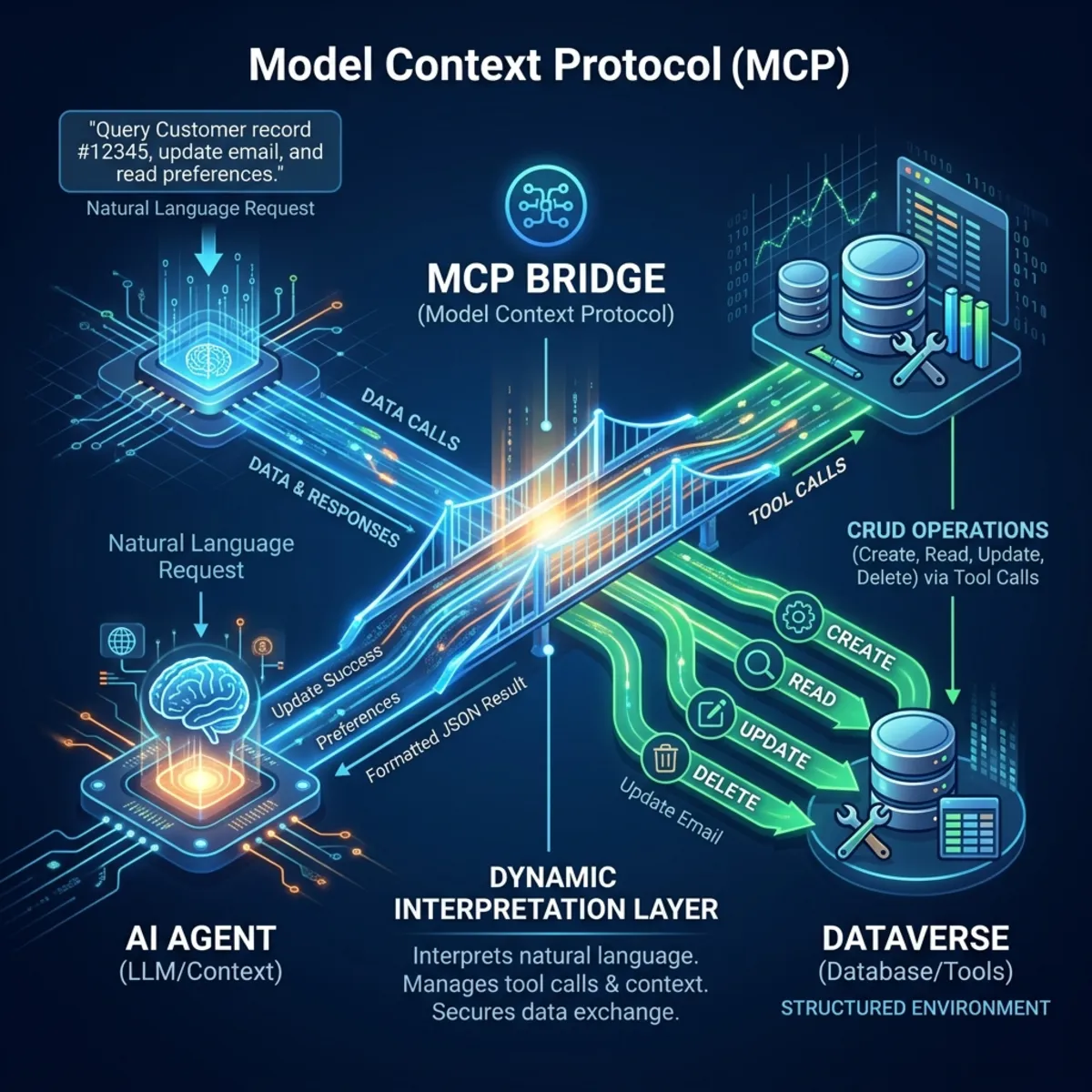
Tool-Level Governance: Security is handled at the tool level. An admin can
explicitly disable destructive actions (like delete record or update table) for a specific agent while keeping read active. If a user asks the
agent to delete a record, the agent won’t just fail; it will explain that it
lacks permission and suggest alternative methods for the user.
4. Bringing GenAI to the Data Layer: Prompt Columns
Dataverse now allows developers to define business logic as a column using Generative AI, effectively bringing AI-assisted capabilities directly into app building for complex, human-in-the-loop systems.
By creating a Prompt Column, you can execute GenAI instructions against existing row data on the fly. For example:
- Sentiment Analysis: Point a prompt column at a “Review Text” field to automatically output “Positive” or “Negative” instantly.
- PII Redaction: Create a prompt that reads a text field and outputs a sanitized version, stripping out brand names, heights, or personal identifiers before the data ever hits the UI layer.
5. Zero-Trust Security for Human and Agentic Workloads
As we scale autonomous systems, security cannot be an afterthought. Dataverse handles comprehensive security, compliance, and governance across multiple layers, centrally managed via the Power Platform Admin Center Security Hub.
Network & Access Security
- Continuous Access Evaluation (CAE): Beyond initial login, Entra ID continuously evaluates user and agent sessions. If a risk profile changes (e.g., an admin disables an account), Dataverse revokes access in near real-time, instantly terminating the session.
- Conditional Access & Cookie Binding: Traffic can be restricted via IP allow-listing (IP blocking), and IP-based cookie binding prevents session hijacking. Additional network controls include TLS, Azure DDoS protection, and Session timeouts.
- Access Control: Dataverse features robust control mechanisms including Security roles, Business Units, Teams, and Column-level security. Access controls allow the same dataset to serve makers, end-users, and agents safely, with each persona seeing only the columns and rows they are explicitly authorized to view.
Threat Detection & Data Protection
- Microsoft Sentinel Integration: Dataverse telemetry feeds directly into Sentinel for real-time, identity-based threat detection and anomalous CRUD monitoring. Unusual operations trigger automated response workflows (like locking an account), supported by Purview auditing.
- Data Protection Controls: Includes strict data residency, Data Policies (DLP), encryption, VNet/private paths, Customer Lockbox, and Data masking to hide sensitive fields from unauthorized internal users.
The Missing Link: Agent 365 Identity
How do you secure an autonomous agent? Dataverse solves this by assigning every agent its own Microsoft Entra ID—often referred to as an “Agent 365” identity.
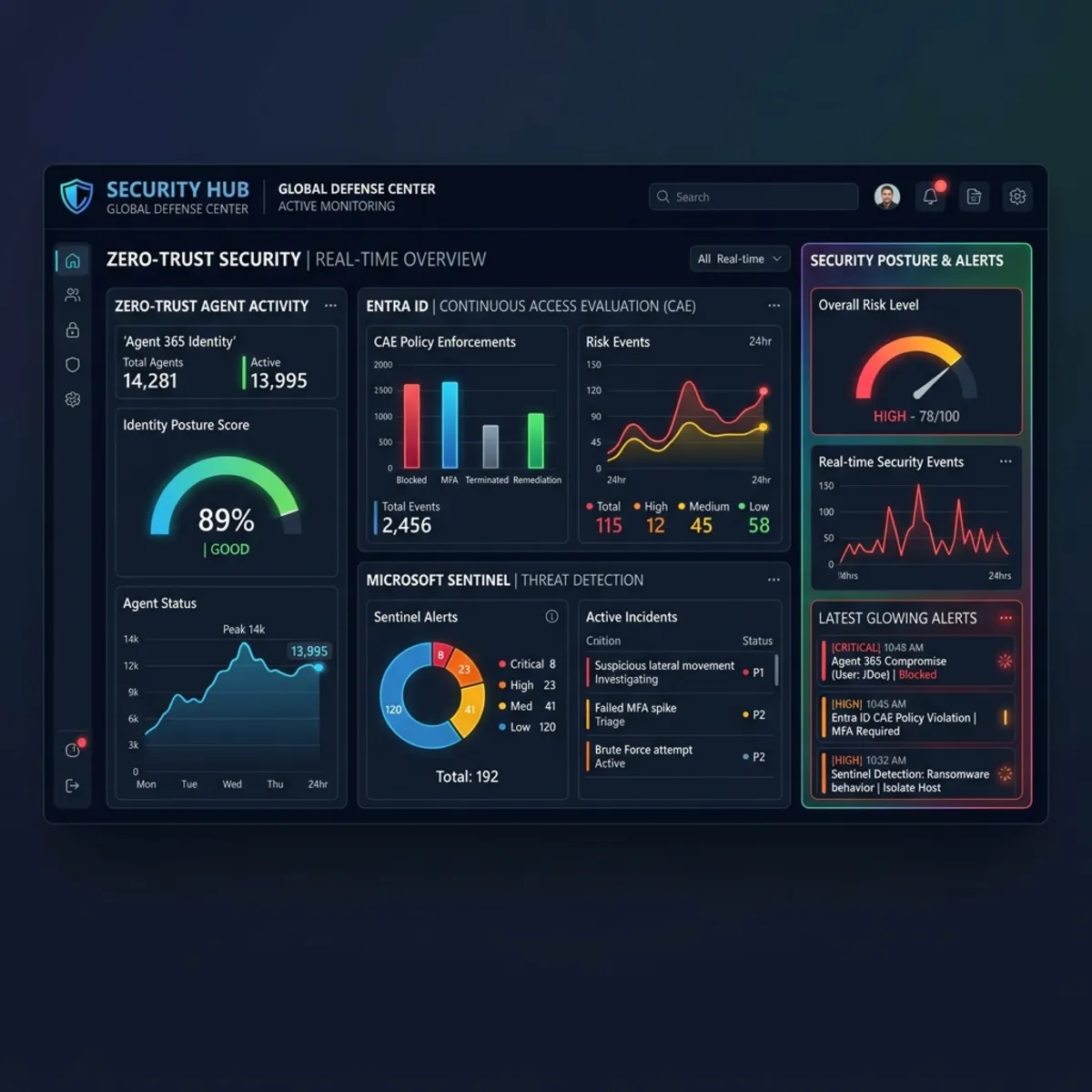
Agents do not use shared service accounts or piggyback on user identities. Because the agent is a first-class security principal, you can apply strict least-privilege access. Every single read, write, and update the agent performs is fully audited in Purview, giving enterprise IT complete forensic visibility into AI operations.
Conclusion
The evolution of Dataverse proves that scaling AI in the enterprise requires much more than just a good foundational model. It requires a turnkey, hyperscale data platform that natively understands business logic, seamlessly integrates with big data analytics, and wraps every interaction—human or agent—in uncompromising, identity-driven security. By leveraging capabilities like MCP, Prompt Columns, and Fabric integration, architects can now build truly intelligent, interconnected enterprise systems.
Read next